


The Problem
When Susan started working from home a few days each week, she simply set up her laptop at the kitchen table each morning and packed everything away at the end of the day.
It worked for a while. But as her workload increased, so did the clutter. Papers piled up. Chargers moved from room to room. Office supplies seemed to spread throughout the house. What started as a temporary solution was becoming a daily frustration.
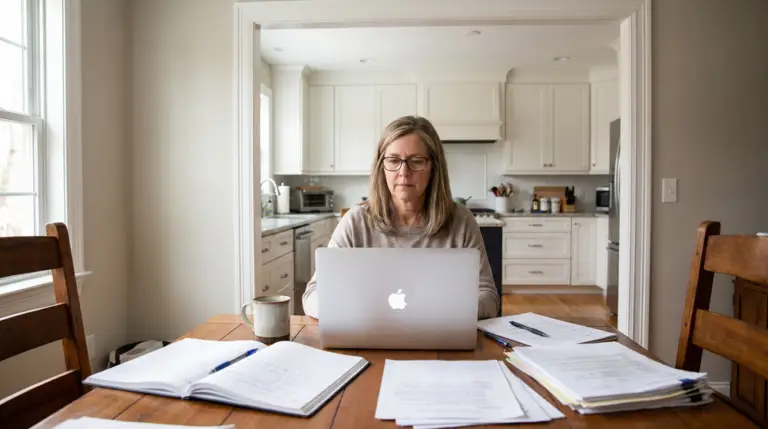
Eventually, Susan realized she was spending too much time setting up and cleaning up instead of actually working.
That’s when she started thinking about creating a dedicated home office.
Finding the Right Space
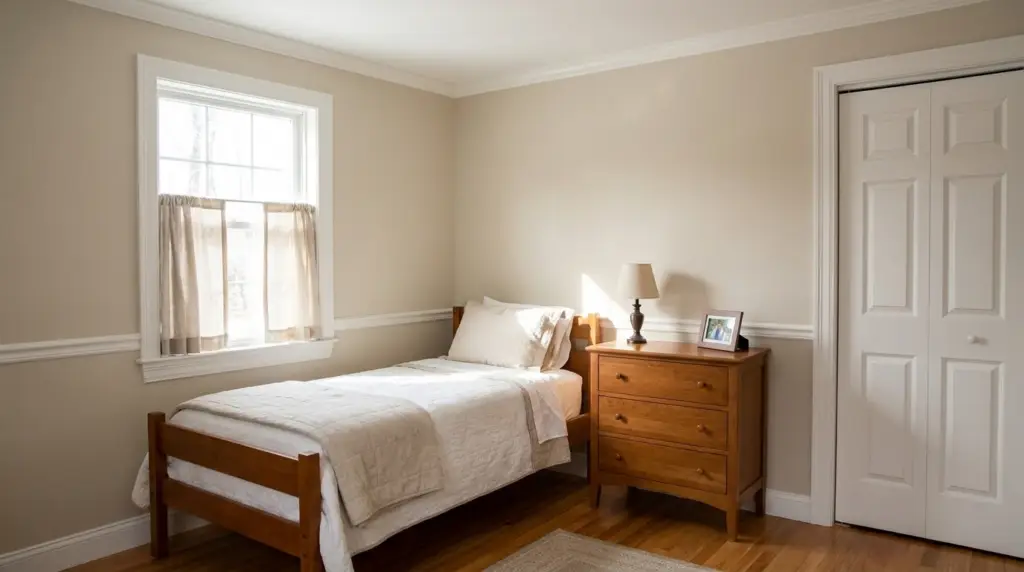
Like many homeowners, Susan already had a room that wasn’t being fully utilized. A spare bedroom had gradually become a storage space for boxes, old furniture, and exercise equipment that rarely got used.
Instead of trying to make the kitchen function as an office, she decided to transform the spare room into a workspace designed specifically for the way she worked.
She began searching online for ideas and eventually found OrganizedSpace.
Starting to Design Her Home Office
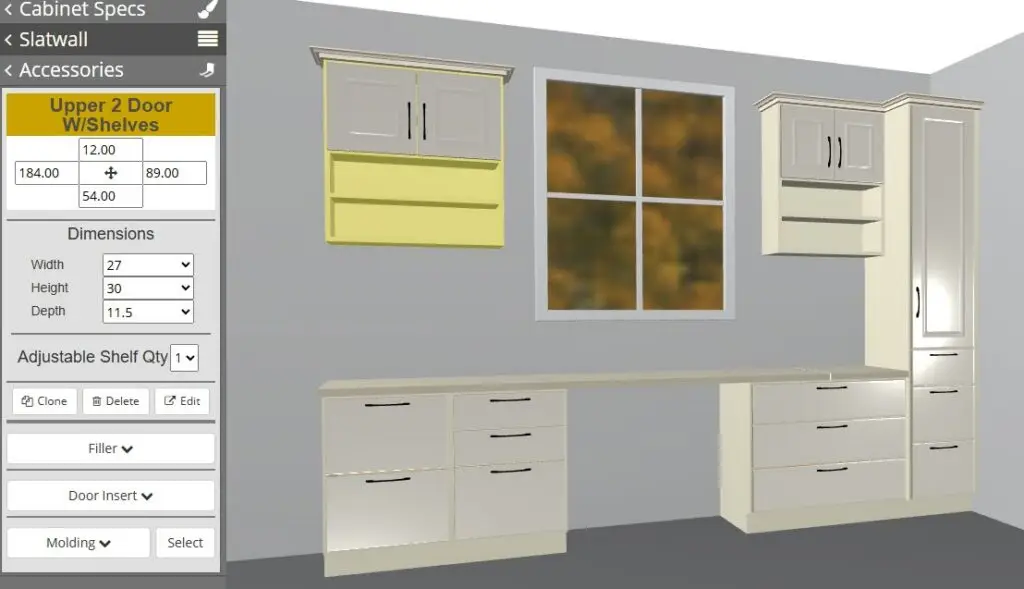
After browsing home office designs and inspiration photos, Susan used the online design tools to begin planning her space.
She knew she wanted:
- A large work surface
- Plenty of storage
- Space for paperwork and office supplies
- A professional-looking room she would enjoy using every day
Connecting With a Designer
Susan started the design and got the cabinets in place, but she wasn’t confident in what she designed, so she decided to connect with one of our designers to get a second opinion and make sure she hadn’t overlooked anything.
Together, they reviewed the layout and discussed how she planned to use the room. The design was simple, but highly functional, giving her everything she needed without overcomplicating the space.

During the conversation, the designer suggested a few minor changes that improved the overall functionality of the space. By adjusting the cabinet arrangement and making better use of one wall, they were able to create additional storage while maintaining an open feel.
The revised design gave Susan everything she wanted—and a few improvements she hadn’t considered.
Choosing Finishes and Samples
With the layout finalized, it was time for the fun part.
Susan and her designer discussed door styles, cabinet colors, and hardware options. While she liked several of the finishes she saw online, she wanted to see them in person before making a final decision.
Her designer recommended a sample kit. Inside were door style samples, color and finish options, and a hardware board displaying the available knobs and pulls. Instead of trying to imagine how everything might look from a screen, she could see the details up close, compare options side by side, and get a better feel for the materials she was considering. It gave her confidence in her choices and made the design process much easier.
A few days later, the samples arrived at her home. Being able to compare colors and finishes in the actual room made the decision much easier. She could see how the cabinet colors looked in the natural light and compare hardware options against her flooring and wall colors.
After reviewing the samples, Susan scheduled another conversation with her designer to finalize the details. Together they confirmed the cabinet color, door style, and hardware finish before moving forward with the order.
From Order to Installation
Once everything was approved, Susan placed her order.
A few weeks later, the shipment arrived. The cabinets were carefully packaged and clearly labeled, making assembly straightforward.
As the room came together, she could finally see the vision becoming reality. The spare bedroom that had once collected unused items was now transforming into a dedicated workspace.
After assembly and installation were complete, the room looked exactly as she had hoped. The cabinets provided plenty of storage. The work surface gave her room to spread out.
And for the first time, everything related to work had a place of its own.
The Result
What Could Your Space Become?
How long can you work from the kitchen table?
For Susan, that question was the beginning of something bigger.
It was the first step toward creating a home office that supported the way she wanted to work—and gave the kitchen table back to the family.
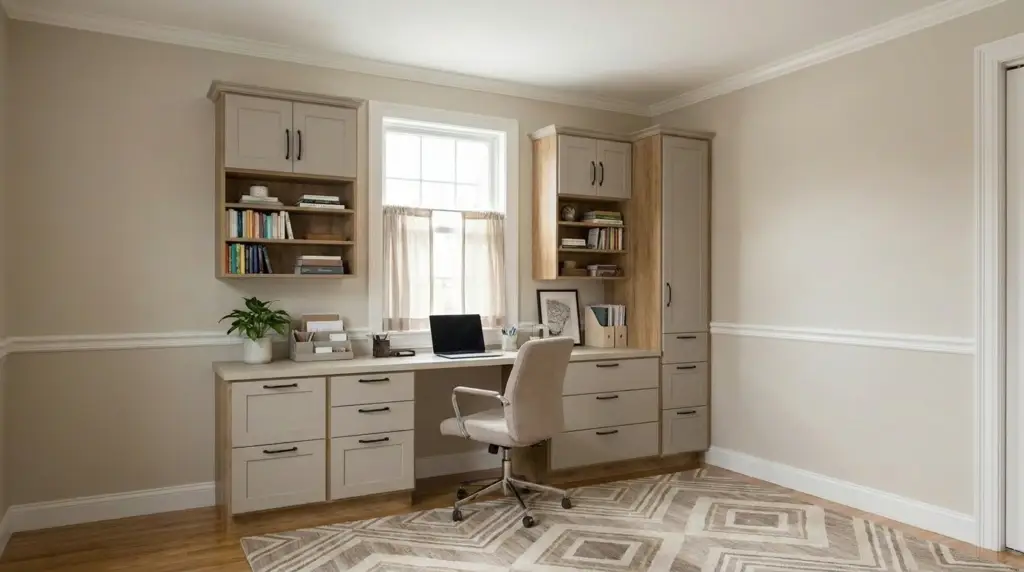
Today, Susan no longer works from the kitchen table. Her paperwork stays organized. Her office supplies stay where they belong. And at the end of the day, she can simply leave the office and enjoy the rest of her home.
What started as a simple frustration became a project that improved the way she works every day.
If you’re currently working from the kitchen table, dining room, or a corner of another room, you may already have the space you need.
Sometimes it just takes the right design—and a little guidance—to turn it into something better.